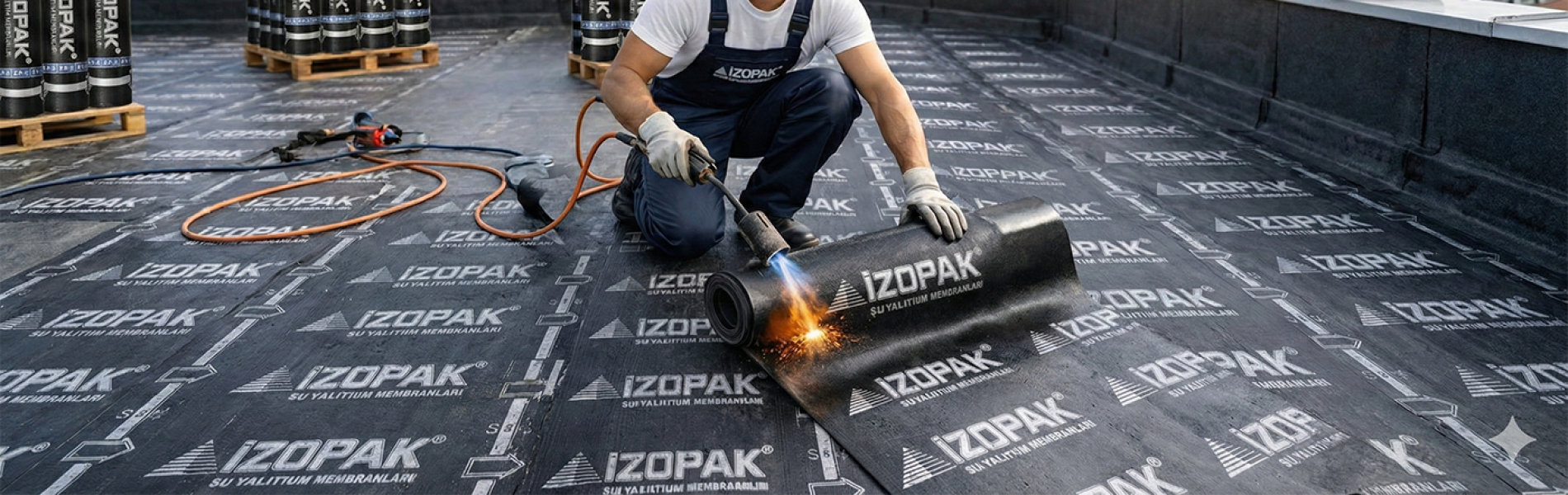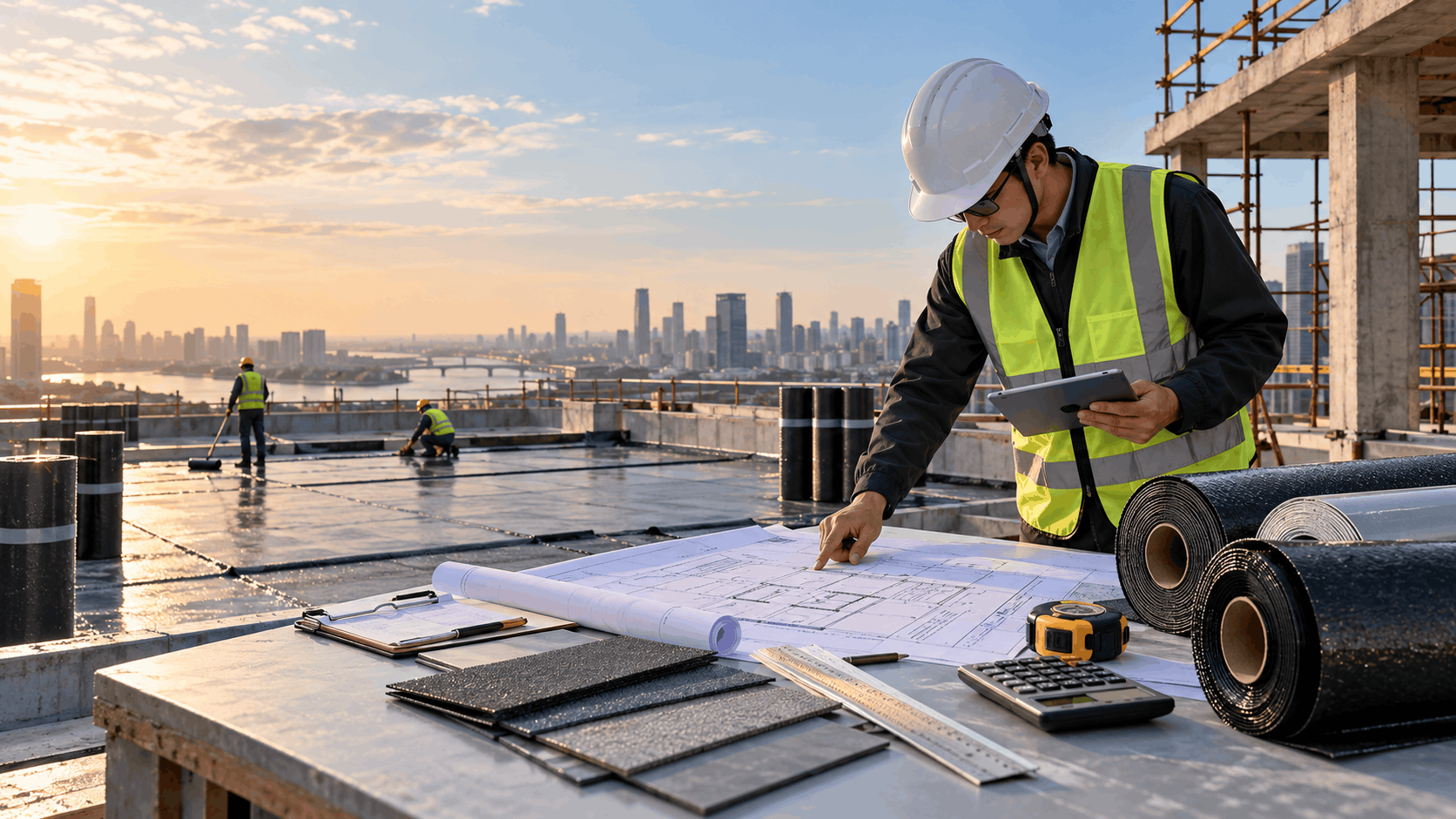
One of the most common mistakes when preparing a waterproofing quotation is calculating cost simply as membrane price per square metre multiplied by roof or foundation area. Professional waterproofing cost should include materials, labour, substrate preparation, detailing, system layers and site conditions.
Include vertical upstands, parapets, foundation walls and special details rather than only horizontal plan area.
Single- and multi-layer membrane systems require different quantities of material and labour. Project specifications should define the build-up.
APP, SBS, mineral-surfaced and foil-faced membranes may have different uses and cost structures. Thickness also affects budget.
Primer, reinforcement at corners, protection boards, drainage layers and other system components should be part of the quotation.
Cleaning, repairs, crack treatment or removal of existing layers can represent significant labour, especially in renovation work.
Chimneys, drains, roof valleys, parapets, pipe penetrations and movement joints require more labour per square metre than open areas.
Membrane overlaps mean theoretical area and actual consumption are not identical. Cutting, geometry, transport and lifting should be considered.
High roofs, restricted access and operating industrial facilities can change installation productivity and safety costs.
B2B procurement should consider long-term system performance, not only initial tender price. A lower-cost but unsuitable system can create much higher repair costs later.
İzopak offers membrane alternatives for different performance requirements. For contractors such as Topak İnşaat, accurate surveying, quantity take-off and system selection directly affect quotation accuracy and project profitability.
Waterproofing cost is much more than membrane price per square metre. Reliable quotations combine technical system design, accurate quantities and actual site conditions.