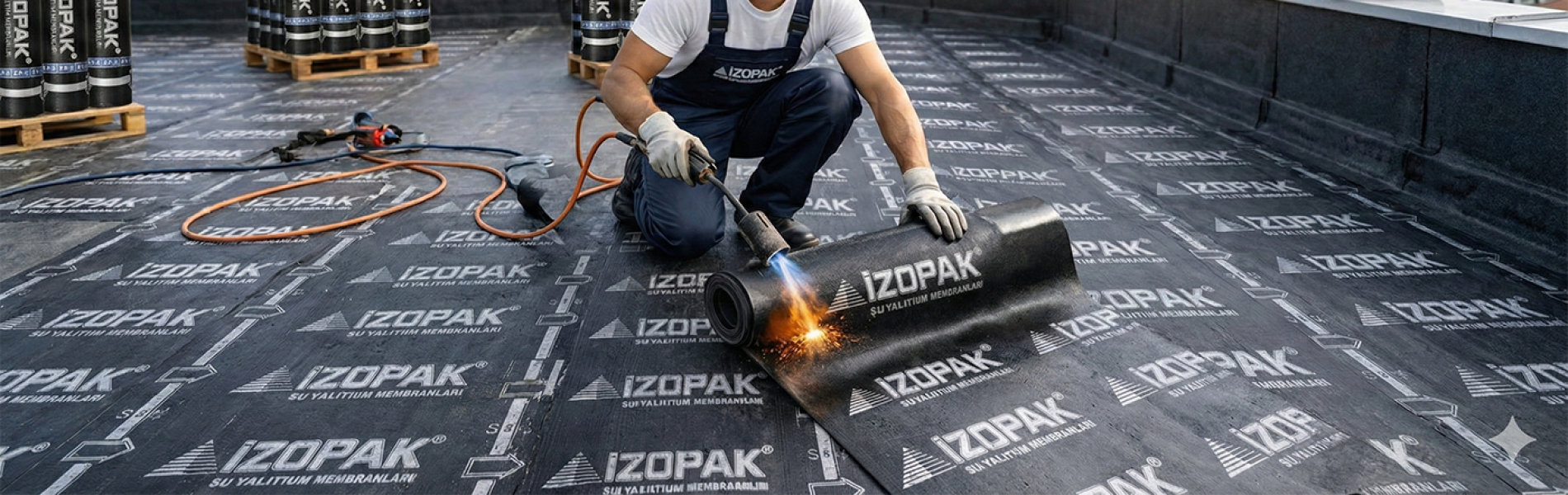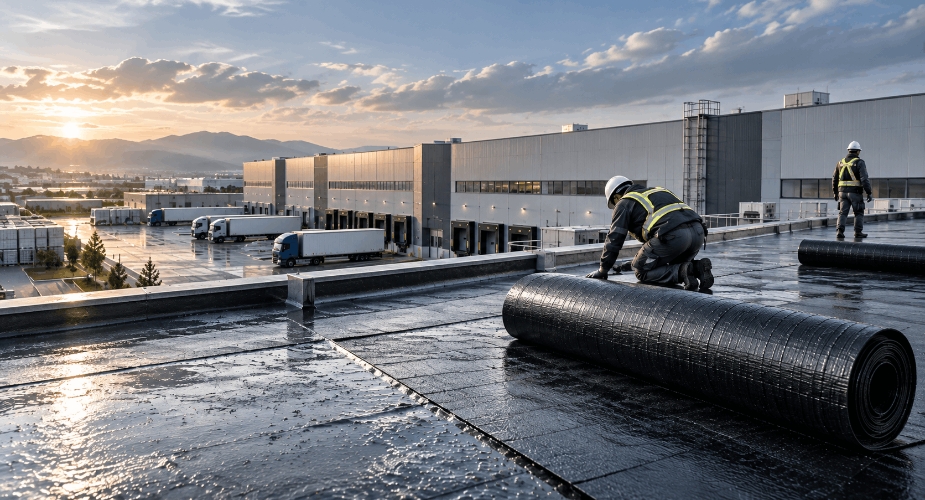
For this reason, waterproofing membranes should not be regarded merely as construction materials that prevent water ingress. They are also a long-term investment that protects structural integrity, reduces future repair costs and extends the economic life of a building.
With more than forty years of industry experience, İzopak Waterproofing Membranes provide reliable and long-lasting solutions for a wide range of projects, including residential buildings, commercial properties, industrial facilities and infrastructure developments. By combining quality, durability and consistent performance, İzopak helps protect structures for the future.
A waterproofing membrane is a protective material used to prevent water and moisture from penetrating structural elements such as foundations, retaining walls, basements, terraces and roofs.
Bituminous waterproofing membranes are among the most widely used waterproofing systems in the construction industry due to their durability, flexibility and long-term performance. When correctly installed, they create a continuous protective barrier that helps prevent water from reaching concrete and reinforced structural components.
Waterproofing membranes are commonly used in:
Selecting the correct membrane, preparing the surface properly and ensuring professional installation are essential for maintaining the performance of a waterproofing system over many years.
Water is one of the most significant external factors affecting the durability and service life of a building. Insufficient, incorrectly installed or incomplete waterproofing can lead not only to visible surface damage but also to serious problems that may affect structural performance.
The most common water-related building problems include:
Waterproofing should therefore not be treated as a secondary application to be considered after construction. It should be planned as a fundamental part of the building during the design, specification and investment stages.
Although concrete is a highly durable construction material, it is not completely impermeable. Over time, water can enter through cracks, pores, joints and weak points in the surface and eventually reach the steel reinforcement within the concrete.
When reinforcing steel is exposed to water and moisture, corrosion may occur. As the corroded steel expands, it can cause cracking, delamination and spalling of the surrounding concrete. This may affect not only the appearance of a building but also the long-term performance of its structural system.
A high-quality waterproofing membrane creates a strong and continuous barrier between the concrete and water. This helps to:
Foundation and retaining wall waterproofing are particularly important because these areas can be difficult and expensive to access once construction has been completed.
Bituminous waterproofing membranes can be used across a wide range of building types and construction applications.
Foundation waterproofing protects buildings against soil moisture, groundwater and water pressure. Membranes applied to foundation and retaining wall surfaces help prevent water from entering basements and reaching reinforced concrete structural elements.
Flat roof and terrace waterproofing is essential for preventing rainwater and melting snow from penetrating the building. A correctly installed roofing membrane helps protect the roof structure and reduces the risk of dampness and water damage in interior spaces.
Large horizontal surfaces in car parks, shopping centres, office buildings and other commercial properties require effective protection against water ingress. Waterproofing membrane systems used in these areas help structural elements withstand changing weather and operating conditions.
Water-related damage in factories, warehouses and logistics centres can disrupt operations and result in significant financial losses. Choosing the correct waterproofing system is therefore critical for protecting industrial facilities and maintaining operational continuity.
Bituminous membranes may also be used in bridges, viaducts, tunnels and other infrastructure projects. Product selection for these applications should take into account the technical requirements of the project, environmental conditions, mechanical stresses and expected service life.
The cost of repairing water-related damage can often be significantly higher than the initial cost of installing a suitable waterproofing system during construction.
Water problems in foundations, basements and retaining walls can be particularly expensive to correct because these areas are difficult to access after the building has been completed. Repairs may involve excavation, surface renewal, interior restoration and interruptions to the normal use of the building.
A correctly installed waterproofing membrane system can:
Waterproofing should therefore be considered a long-term investment in the future of a structure rather than an additional construction expense.
Using the same waterproofing membrane for every structure and application is not appropriate. Product selection should be based on the building type, application surface, climate conditions, water exposure and technical requirements of the project.
The following factors should be considered when choosing a waterproofing membrane:
Architects, engineers, contractors and waterproofing professionals should evaluate the total service life and long-term performance of the system rather than making decisions based solely on the initial purchase price.
Selecting a high-quality product is only one part of a successful waterproofing system. Correct installation is equally important. Even minor application errors can compromise the continuity of the membrane and allow water to penetrate the structure.
For a reliable waterproofing membrane installation:
Appropriate inspection and testing after installation can also help confirm the integrity and performance of the waterproofing system.
With more than forty years of experience in the waterproofing industry, İzopak offers membrane solutions suitable for different building types and application requirements.
İzopak Waterproofing Membranes can be used in residential buildings, commercial developments, industrial facilities and infrastructure projects. They are manufactured with a focus on quality, durability and long-term waterproofing performance.
By combining the right product with professional installation, an integrated waterproofing system can be created to protect the entire structure, from the foundation to the roof.
Waterproofing membranes can be used in foundations, retaining walls, basements, terraces, roofs, car parks, industrial facilities, warehouses, bridges, tunnels and viaducts.
A bituminous membrane creates a protective waterproof layer over the application surface. It helps prevent water and moisture from penetrating structural components and damaging the building.
Foundations and retaining walls may be continuously exposed to groundwater, soil moisture and hydrostatic pressure. Because problems in these areas can be difficult and expensive to repair later, foundation waterproofing should be correctly planned and installed during construction.
Surface preparation, primer application, membrane overlaps, joints, corners, drainage points and welding procedures directly affect the success of the installation. All application stages should therefore be completed in accordance with technical requirements and professional standards.
Waterproofing is essential for creating safe, durable and long-lasting buildings. A professionally designed and installed waterproofing system, using the correct products from the foundation to the roof, helps improve structural durability, reduce maintenance costs and support more comfortable indoor environments.
Combining quality, reliability and long-term performance, İzopak Waterproofing Membranes continue to provide effective solutions for the construction industry and help protect the future of buildings with more than forty years of experience.
Explore İzopak waterproofing membrane solutions or contact our specialist team to identify the most suitable waterproofing system for your project.