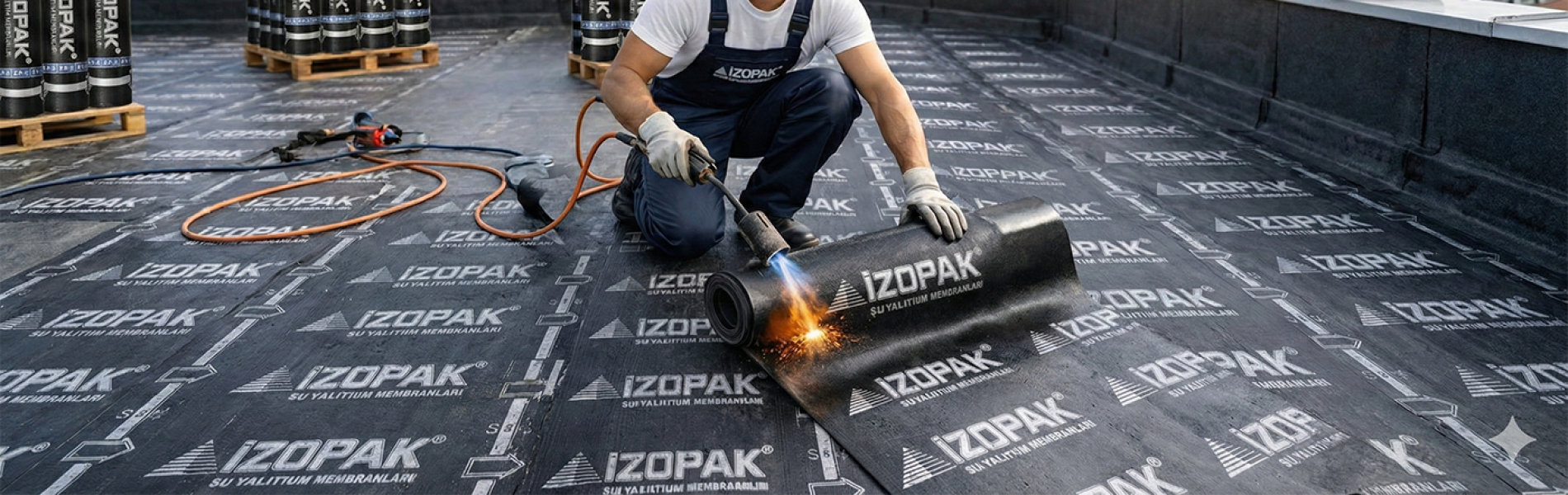
Environmental conditions are an important part of bituminous membrane installation. Construction schedules may create pressure to continue work in all weather, but temperature, rain, wind and substrate moisture can directly affect installation quality.
As a general principle, membrane should not be installed over visibly wet or water-covered substrates. Trapped water can compromise contact and application quality.
Winter installation may be possible, but low temperatures can influence flexibility, handling and substrate conditions. Minimum application temperature and storage requirements in the specific product data sheet should be followed.
High surface temperatures can also make installation more difficult. Storage, handling and controlled torch application should consider site conditions.
Strong winds on roofs can make open rolls difficult to control and can create safety risks. Wind can also affect flame control during torch-applied systems.
Dry weather alone is not enough. Concrete or screed must also be in a suitable condition. Morning dew, condensation and recently installed screeds should be considered.
For İzopak membrane systems, product data sheets and project requirements should guide the final installation decision.
The right approach is to evaluate product requirements, substrate condition and current weather together rather than relying on a single generic temperature rule.