One of the most common questions when purchasing bituminous membranes is whether to use 3 mm or 4 mm material. Thickness is important, but it does not determine product quality or project suitability by itself. Membrane thickness is only one part of the waterproofing system design.
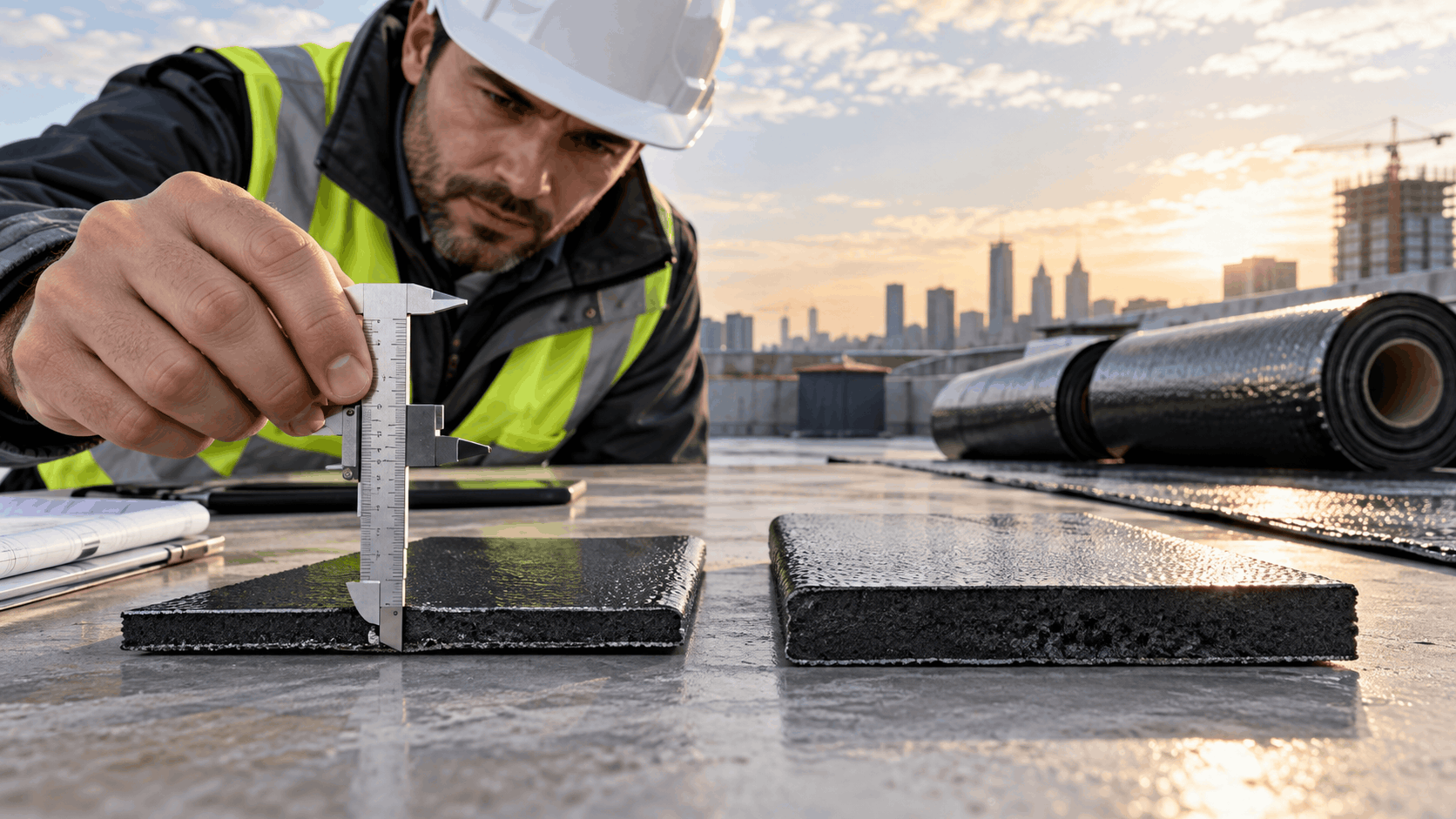
Thickness refers to the nominal body thickness of the membrane. A thicker product contains more material and may influence certain mechanical properties, but reinforcement type, bitumen modification, surface finish and manufacturing quality are also critical.
Depending on the design, 3 mm membranes may be specified in multi-layer systems and in selected foundation or roofing applications. Product data and project specifications should always govern the decision.
4 mm membranes provide a thicker build and may be selected for specific mechanical or finishing requirements. However, greater thickness does not automatically mean better overall system quality.
No. A poorly detailed 4 mm system can perform worse than a correctly designed alternative. The aim is to match product configuration to actual exposure and project requirements.
Procurement teams should evaluate not only roll price but also number of layers, labour, protection materials, installation time and future maintenance.
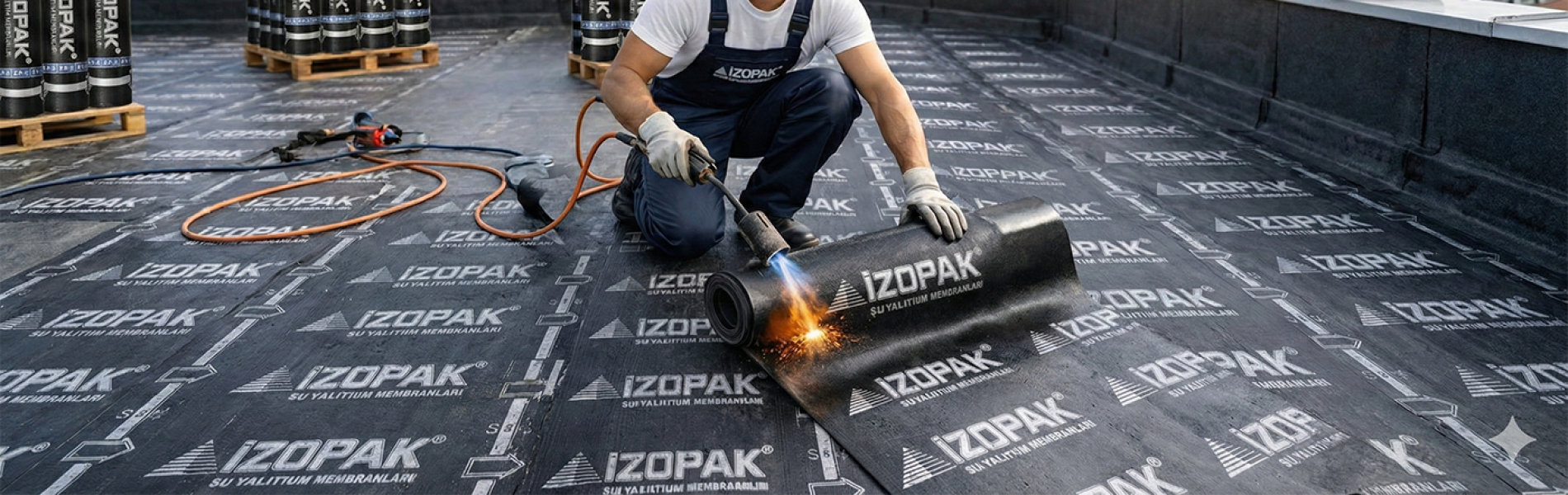
İzopak offers bituminous membrane solutions with different thicknesses and performance characteristics to support project-specific waterproofing design.
The choice between 3 mm and 4 mm membranes should be based on the full waterproofing system rather than thickness alone.