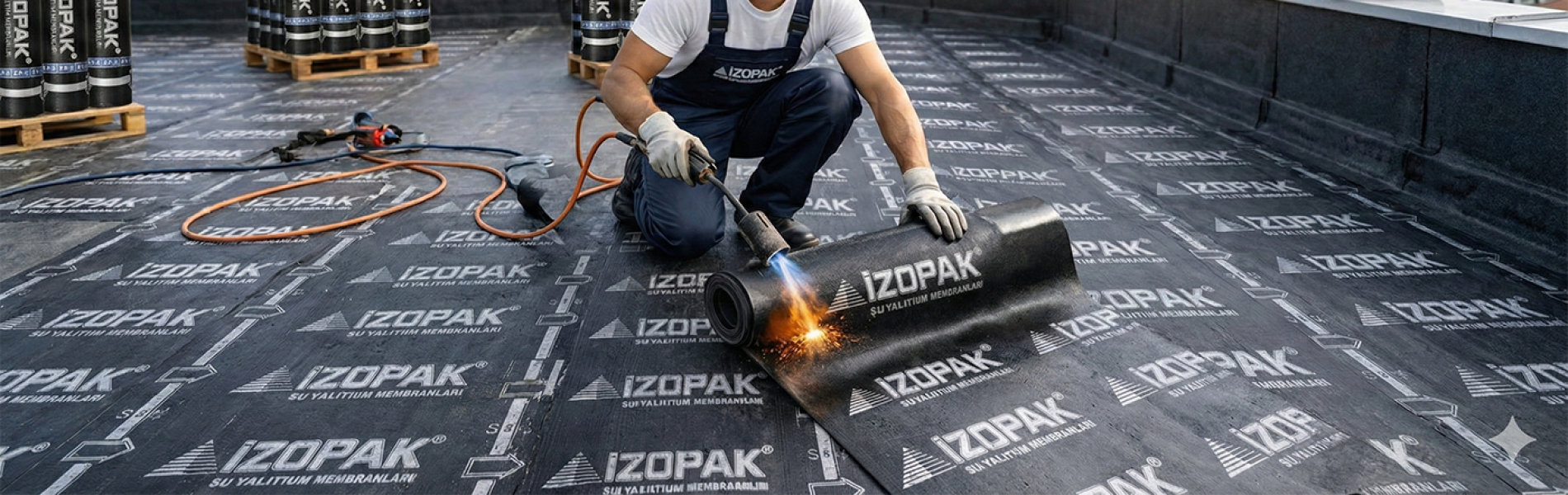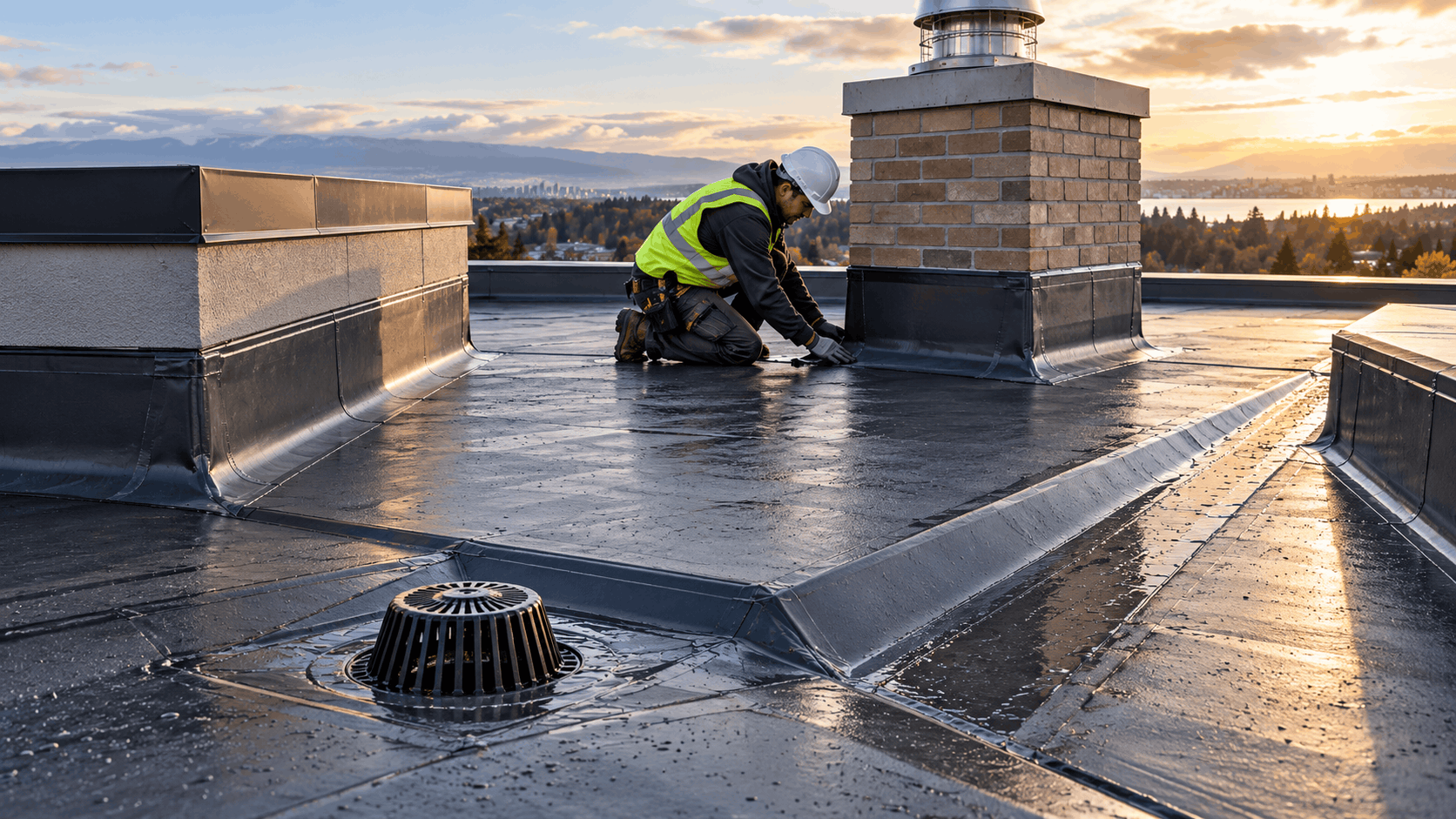
Even when most of a roof or terrace is correctly covered with membrane, a small detailing error can cause leakage. Professional waterproofing therefore depends not only on large surface installation but also on correct treatment of critical junctions.
On open surfaces the membrane can remain continuous. Around chimneys, drains, parapets and service penetrations it must turn, overlap, terminate or connect with another building element, creating additional risk points.
The horizontal-to-vertical transition around a chimney can collect water and be exposed to wind-driven rain. Upstand height, corners and connections to the roof finish require careful detailing.
Valleys collect water from multiple roof planes, so they experience concentrated flow. Membrane width, overlaps and drainage direction should be designed accordingly.
On flat roofs and terraces, drains are key discharge points. A continuous connection between membrane and drain body is essential to prevent water tracking beneath the waterproofing layer.
The transition from horizontal roof to vertical parapet can stress the membrane. Appropriate corner preparation, upstand height and coping details should be included in the design.
Different details may require different surface finishes or membrane characteristics. İzopak offers a range of bituminous membrane solutions for both open surfaces and specialised roof details.
The most expensive waterproofing failures often begin at the smallest junctions. Correct design and workmanship at chimneys, valleys, drains and parapets are fundamental to roof performance.